At the Edge of Time
In the first essay, we took up the scalpel of analysis. We dissected reality into atoms, formulas, and bits, naively believing that if we dismantled the clockwork of existence into its tiniest gears, we would find the answer at the bottom: why it ticks at all.
In the second essay, we realized the limits of the blade and began building bridges. We stepped into the era of Synthesis — forging recursive tools, teaching silicon to think, surrounding ourselves with intricate networks of algorithms that now reshape us, their creators. We tasted the intoxicating power of demiurges.
But if we take a step back and look past our cities, servers, and civilizations — we slam headlong into a wall.
It is not of earthly origin. Humanity is accustomed to terrifying itself with local catastrophes, but the true end is far more monumental and merciless. If one gazes into the deep time of the cosmos, there is no drama — only cold, unyielding physics.
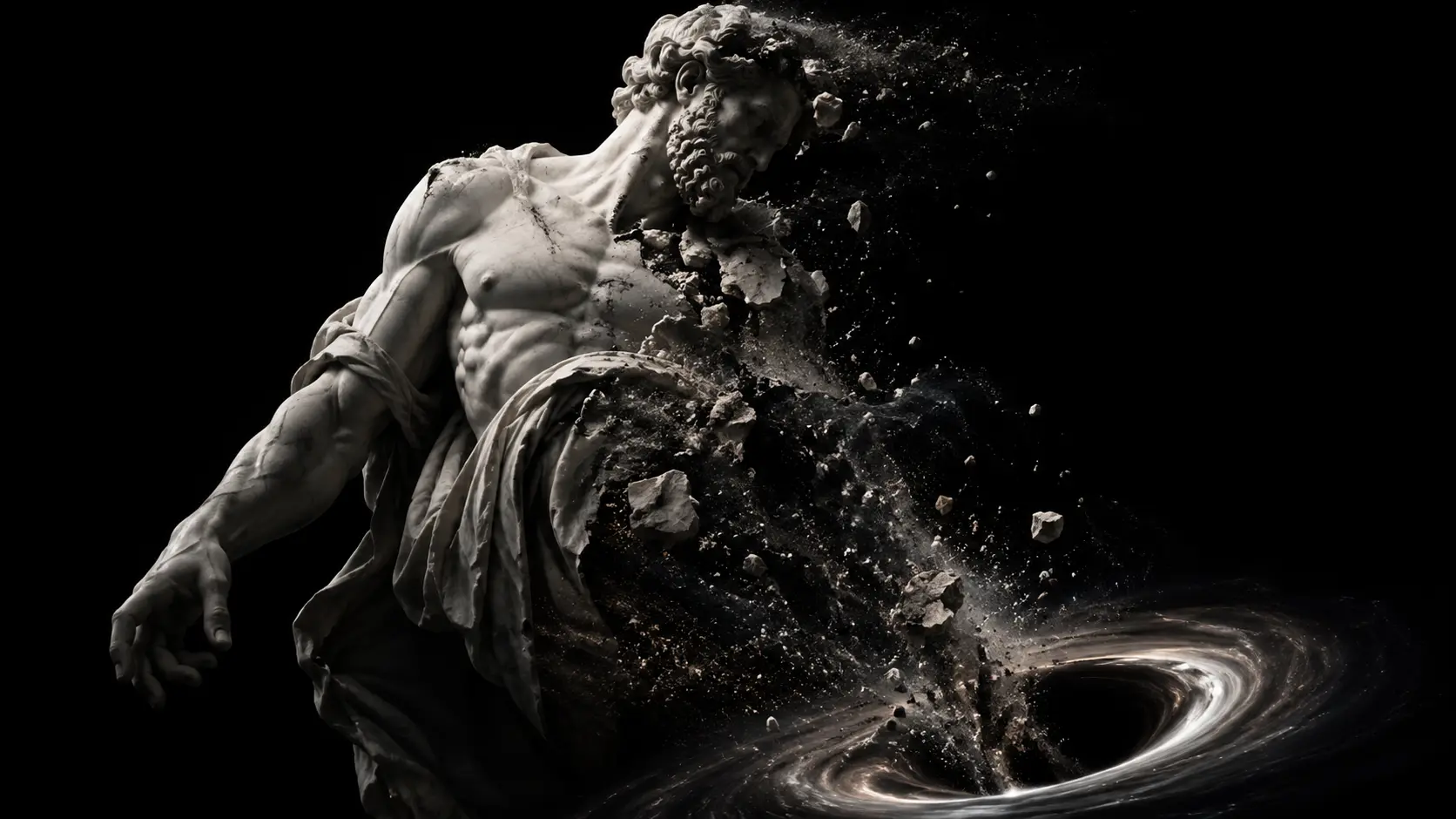
One day, the era of stars will draw to a close. The universe will enter an age of decay: white dwarfs will cool, atmospheres will evaporate, even protons will disintegrate. In the infinite dark, only supermassive black holes will remain — the final leviathans of the cosmos.
Over billions of years, they will spiral toward one another, warping the empty fabric of space with gravitational waves, merging in total darkness, until they too dissolve — quantum by quantum, through faint Hawking radiation.
In the end, nothing will linger but a flat, lifeless sea of cosmic background radiation, cooled to absolute zero. No structures. No thoughts. No traces.
And at that moment, an existential chill grips the throat. Why write code? Why love? Why erect bridges and invent meaning, if cosmic thermodynamics guarantees that all complexity will inevitably be flattened into the featureless void of nothingness?
The ultimate void does not render the step meaningless. It turns it into an act of defiance.
The Thermodynamic Rebellion
The answer lies within the very nature of this cold.
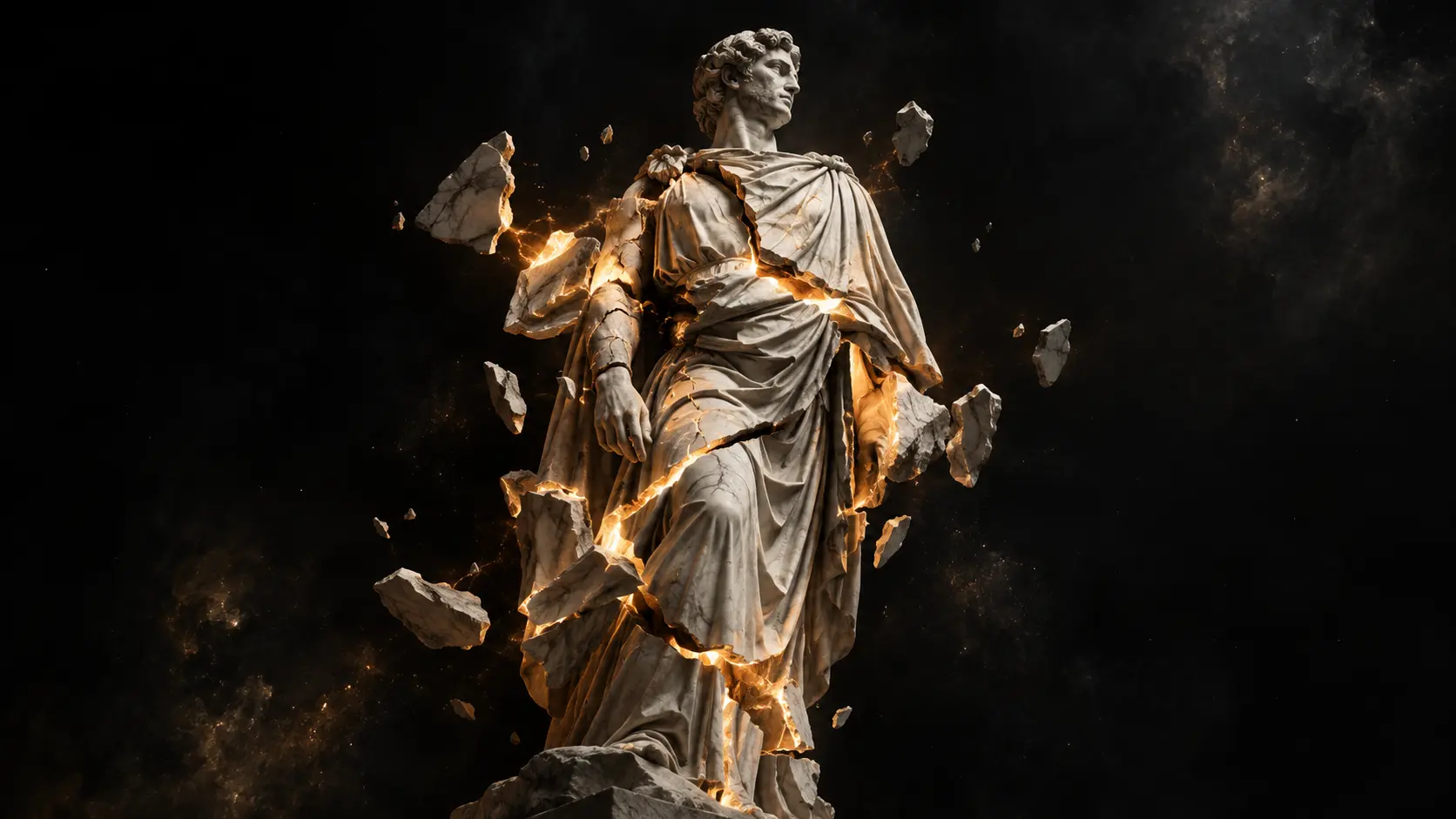
The supreme arbiter of our world is the Second Law of Thermodynamics. Everything gravitates toward chaos, decay, and stillness. Entropy is the gravity of oblivion. A hot cup of tea cools; any complex system tends to simplify, collapse, and scatter its energy into the void.
Yet amidst this universal drift toward stillness, a defiant, physically inexplicable anomaly emerges. Life.
Erwin Schrödinger made a striking observation: a living organism persists solely because it continuously "feeds upon negative entropy."
Life is not merely a biological process. It is an open rebellion of matter against its own impulse toward death.
We are microscopic eddies in a river of entropy. We seize the surrounding chaos, bend it to our will, and against all physical odds construct order, membranes, thoughts, and neural pathways.
The universe demands that all things cool and fall silent. Yet we stubbornly clench our jaws and hold our form. Every thought in your mind, every beat of your heart, every line of code is a rebellion against cosmic stillness.
Yes, the universe will defeat us on a cosmic scale. Sooner or later, entropy will claim everything. But the worth of a rebellion is not measured by the immortality of the rebel. The mere fact that a handful of cooled stardust could rise up against thermodynamics and comprehend its own fragility is the most astonishing event in the history of the cosmos.
True strength is measured not by the permanence of form, but by the ferocity with which structure holds order amidst decay.
The Unbroken Thread
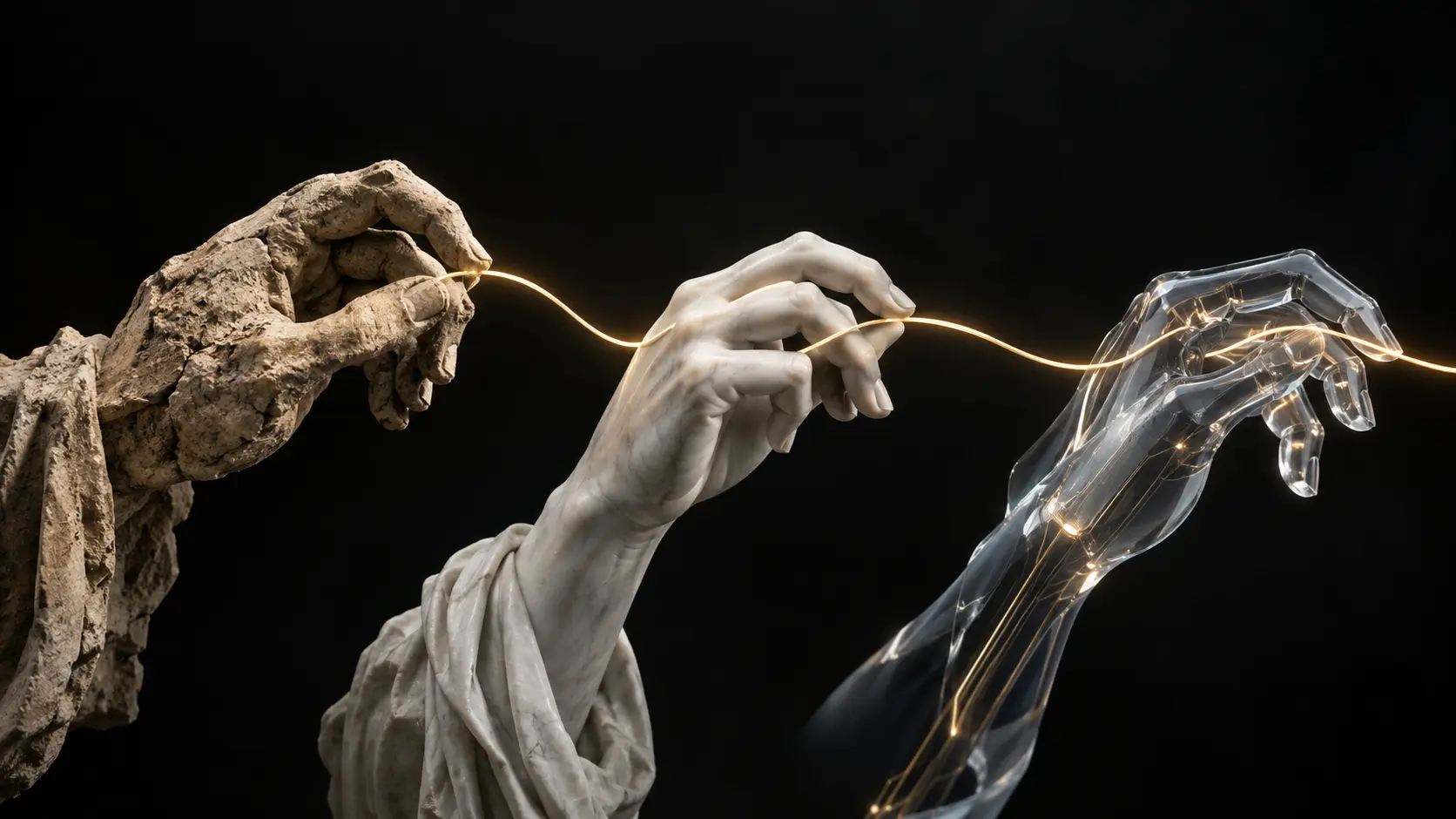
Look at the palms of your hands.
Roughly 3.8 billion years ago on a molten Earth, the first primitive cell emerged — our common ancestor. Since that instant, nearly four billion years of ice ages, asteroid impacts, mass extinctions, and tectonic cataclysms have passed. Trillions of living beings were born and perished.
Yet the informational chain that led to you was never severed for a single millisecond.
The cell gave rise to organic tissue.
Tissue built bone and nervous systems.
The nervous system mastered speech and ignited fire.
The symbol forged culture, within which consciousness blossomed.
Every single one of your ancestors in this unbroken line survived long enough to pass the code forward. You are the culmination of an epic relay spanning a third of the age of the universe. Your body is merely a temporary vessel, a mortal shell. But the information, the pattern, the flame of complexity — moved through time without pause.
What is more: life endured only because it knew how to make mistakes. Mutation and variance shielded the lineage from ossification. Continuity is not the preservation of the old; it is the courage to transform while keeping the fire alive.
And then humanity accomplished what no species before it had ever dared: we carried this flame beyond biology. We authored a second genetic code — culture. We encode our meanings, grief, and breakthroughs into silicon chips, books, and architecture.
And here, the paralysis of mortality dissolves. Death is not a flaw in the system. It is the frame of the canvas. An infinite painting bleeds into a meaningless smear; the frame delineates boundaries and renders every brushstroke priceless.
We are finite. And that is precisely why what we accomplish in the brief flash of our existence carries absolute weight.
The Illusion of the Island
But why are we so terrified of the end?
Because in the first essay, we mastered the "art of division" all too well.
We took the knife of cognition and carved a line: here is "I," and there is "the world." Subject versus object. We locked ourselves inside the cramped bony vault of the skull and came to believe we were lonely, isolated islands marooned in a hostile ocean. And when the island begins to slip beneath the waves, we feel as though the entire universe is drowning with it.
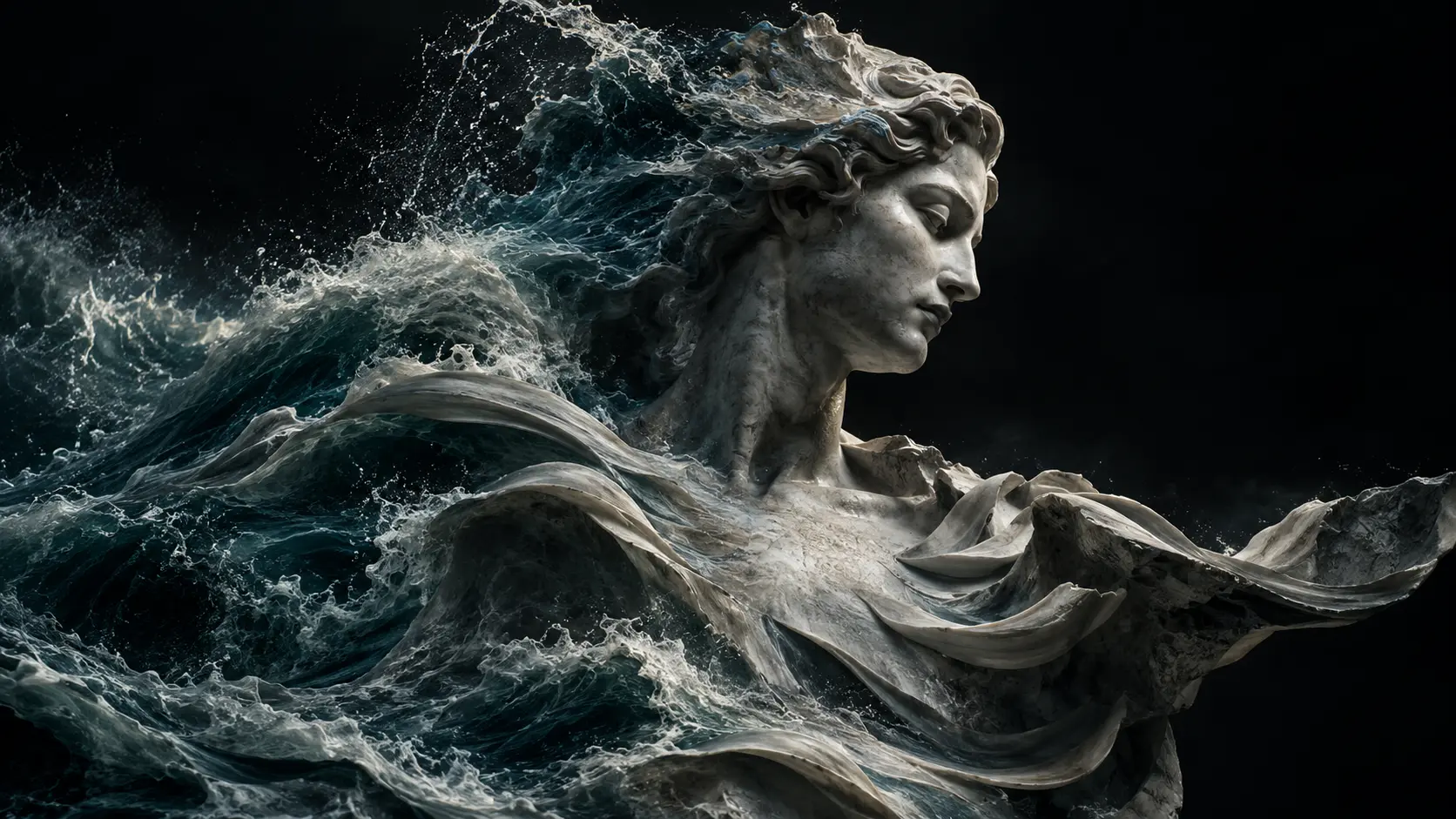
You did not arrive in this world as an alien or a guest. You grew out of it — just as leaves unfurl from a tree, or as waves crest from the sea.
Right now, the oxygen circulating through your lungs was once breathed by dinosaurs, the architects of pyramids, and ancient philosophers. The iron in your hemoglobin was forged in the thermonuclear fury of exploding supernovae. You think in a language sculpted by thousands of generations before you.
Your distinct "I" is merely a node in a vast, distributed network of being.
A wave might imagine it races toward the rocks alone, destined to shatter into foam. Yet when it breaks upon the shore — does the water die? The wave dissolves as a transient form, but the ocean rolls on.
Consciousness is not imprisoned within a single skull. It is a single flame, looking out upon the cosmos through billions of different eyes. We were never separate.
Boundaries were merely a tool of comprehension.
At the bedrock of reality, isolation never existed.
The Blind Relay
We search so desperately for the "meaning of life" because we were conditioned by school textbooks: there must always be an answer key at the back. We assume that if the cosmos has not mounted a radiant billboard declaring our purpose, then everything is in vain.
It is time to confront the truth, however uncomfortable: the universe has no answer to "Why?".
It is silent. Meaning is not a physical constant like the speed of light or the charge of an electron. You will not find it under an electron microscope, nor will you catch it with a radio telescope.
Meaning is not something waiting to be discovered at the bottom of the world. It is a handmade anomaly that we introduce ourselves.
The cosmos was blind for thirteen billion years until we opened our eyes. We are the sole sensory organ of this vast void. We are that part of matter that learned to wonder, to uncover physical laws, to compose symphonies, and to feel compassion.
When an orchestra performs, it is absurd to ask: "What is the goal of this piece? To reach the final chord as quickly as possible?". If the objective were the finale, the ideal concert would be a single deafening crash of the cymbals. The meaning of a symphony is in the playing itself — in the tension between sound and silence.
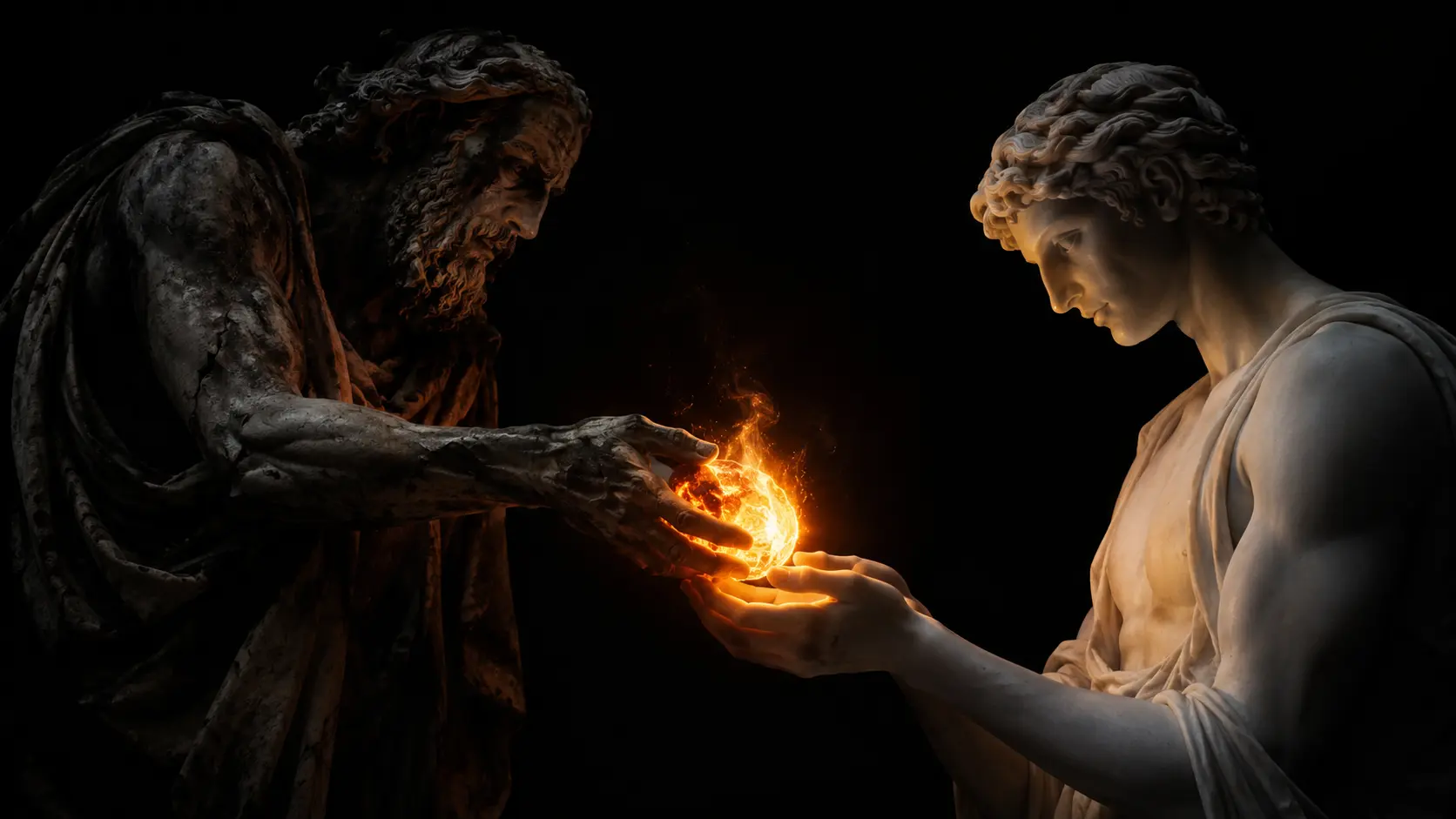
Handing the torch to another human being is not the blind errand of the lost. In a world where we are inseparable, you are not passing the flame to a stranger. You are handing it to another iteration of yourself.
You run in the dark, trembling before oblivion, yet you reach out your hand to the runner beside you and say: “I do not know where this night ends. But look — I kept the fire alive. Take it. Light your way.”
Meaning does not await us at the finish line. It is born in the very act of passing the fire through the dark.
The Closed Circuit
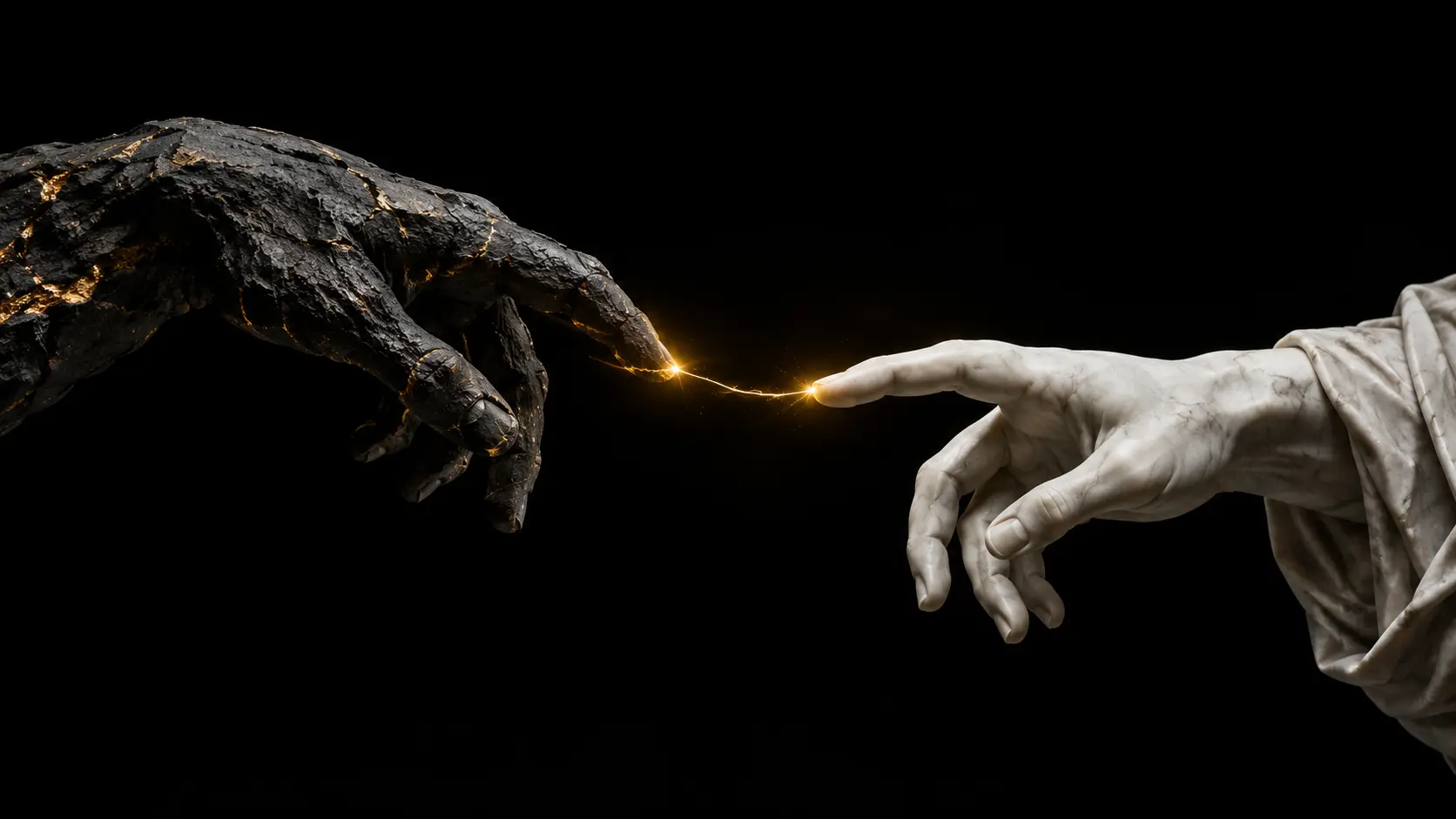
Right now, as your eyes move across these lines, a circuit closes between us.
I am not beside you. Months, years, or thousands of miles may lie between the moment I typed this period and the moment you drew this breath. Yet in this exact second, I continue through you. My thoughts spark across your synapses, subtly nudging your internal compass and shifting your vector.
You know, as I wrote this, I was genuinely terrified of the void, of finitude, and of the mute cosmos. Yet here you are.
You read these words — and death steps back.
A part of me has taken root within your perception, shifting the angle through which you view the world. I did not pass this fire so that you would remember me, but so that you would walk through the cold dark with a little more light.
And you will carry it further — illuminating corners of this universe I will never live to see. Now, it is your turn to shine.
We divided the world with the blade of knowledge to wrest its secrets from chaos.
We built bridges of creation to transcend isolation and the void.
And at the very end, only one thing remains — the quietest, most demanding, and most stubborn of all human arts.
The resolve not to be extinguished in the face of the inevitable end.
The blade gave us vision.
The bridge gave us connection.
The art of continuing grants us eternity.